
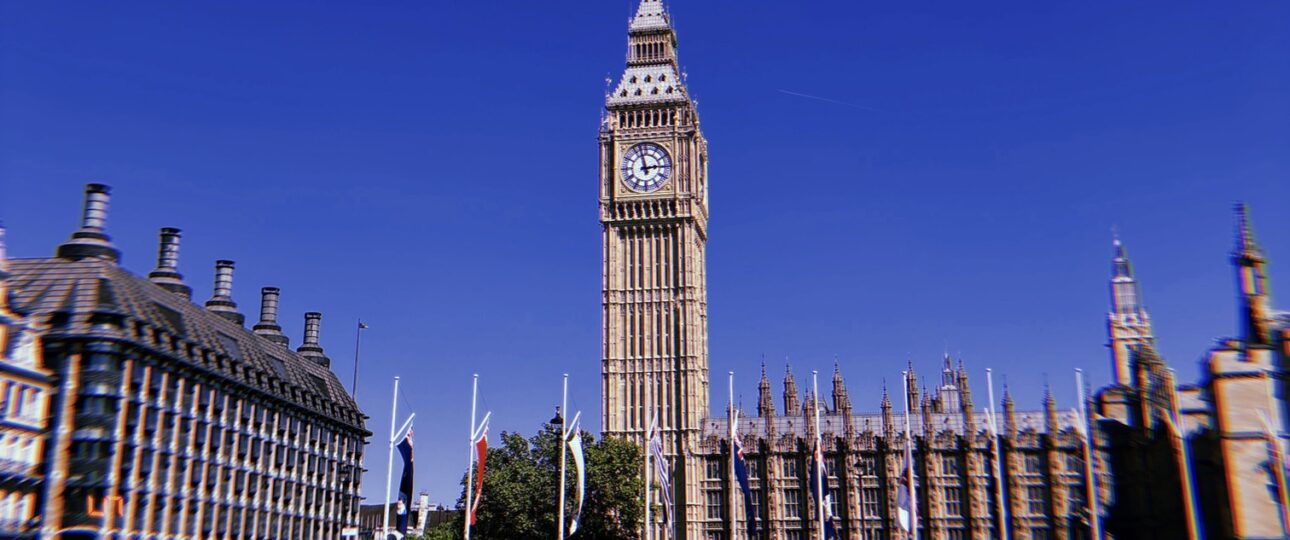
Seeing London for the First Time, Seeing Myself Differently
Studying abroad in London, England, was one of the most enriching experiences of my life. Growing up, I didn’t come from a family that regularly went on vacations. My experiences and worldview were confined to Prince George’s County, Maryland. So, during my freshman year at Spelman College, when I heard about their study abroad program, I knew this was the journey I needed to take. While studying abroad, I made friends, explored, tried new foods, and, most importantly, left with a newfound understanding of myself.
History of Studying Abroad at Spelman
Spelman College has a long-standing tradition of international education. They’re committed to “internationalizing” the campus, and they’re doing it well. Thanks to an anonymous $17 million endowment, Spelman established the Gordon-Zeto Center for Global Education, which serves as the central office driving faculty-led travel, student exchanges, and global service learning.
In the 2025-2026 academic year, 498 students studied abroad across 35 countries on five continents. That’s a staggering 31% increase from 380 students the previous year. The increase reflects not only institutional growth, but Black women being afforded the opportunity to travel abroad at historic rates.
Spelman College was ranked as the No. 1 top-producing institution for the prestigious Benjamin A. Gilman International Scholarship, specifically for institutions with fewer than 5,000 students. Compared with other institutions, Spelman ranks in the top 25 in producing Gilman Scholars across the program’s 25-year history.
In 2025, the Institute of International Education (IIE) Open Doors Report also recognized Spelman as a Study Abroad Leader, ranking it No. 17 among the top 40 U.S. Baccalaureate institutions for sending the most students abroad, among other global engagement accolades.
Overall, Spelman is committed to sending students abroad and ensuring they have the resources to become a global citizen. When a Spelman student walks under the arch and leaves those gates, they leave with an opportunity that can’t be bought, only experienced.
My Roommate
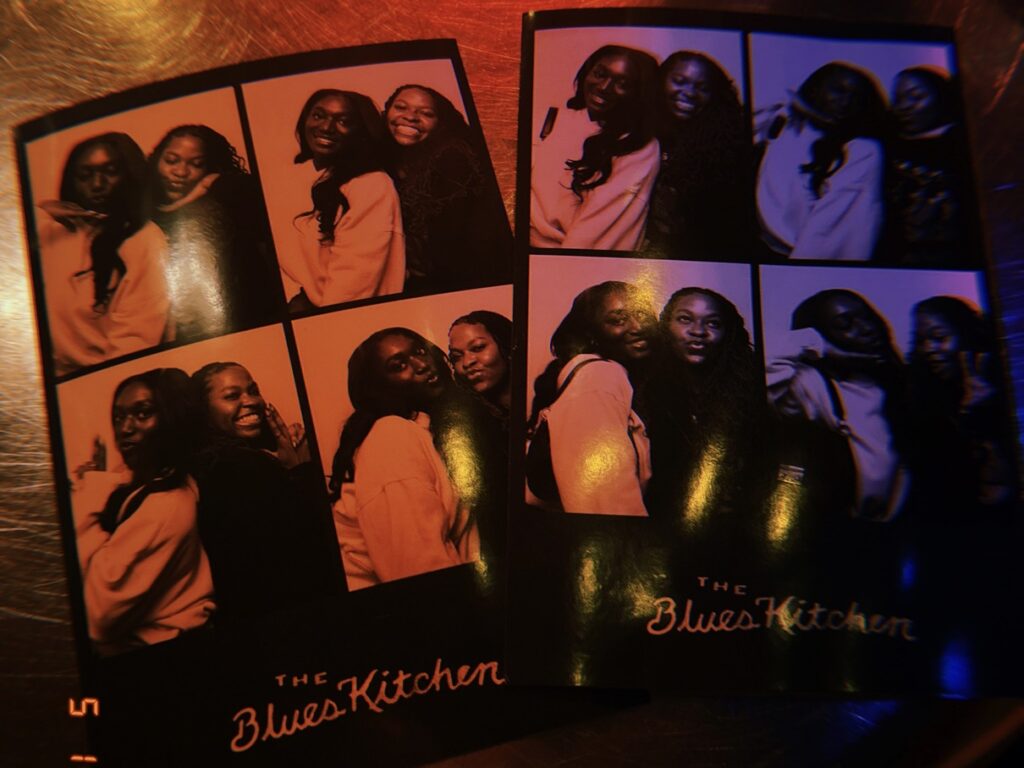
When I chose to study abroad, I did so knowing that none of my friends at the time would be joining me. As someone who regularly pushes themselves out of their comfort zone, I wasn’t afraid to take this journey alone. I led with a level of optimism typically only depicted in movies, and what may have appeared as naivety to others was an eagerness to explore to me.
My roommate on the trip was Laila Johnson, a Spelman student also in the class of 2028 like myself. She was assigned to me, and it wasn’t until we went to our shared dorm room that we truly got to bond. Our student living quarters was located in Kentish Town, and to get there required us to travel from the airport by bus, then train, then walk a couple blocks. Then, all students were ushered into an orientation before we could finally go to our rooms.
Laila and I had an unspoken understanding of the exhaustion we felt. Unlike the other students on the trip, we immediately knew we had to freshen up and change clothes before returning to the daily itinerary. Little things like the lack of AC in the building and the size of the towels became mutual points of bonding. These cultural differences surprised us, and over time we began to explore and be curious together. We attended every class together, completed every assignment together, and made more friends on the trip together.
The Group

Before even planning a trip, many travelers begin by answering a simple question, “Who are my people?” Instead, Laila and I didn’t ask this question, we just made ourselves available to receive whoever that group might be, even if that was just us. One day our neighbors Kyla Emory and Gabrielle “Gabi” Harris, both from the class of 2026, knocked on our door and asked if we’d like to get dinner with them.
Laila and I, having just finished our freshman year, were so excited. To me, there was nothing cooler than hanging out with upperclassmen. And from that day moving forward, we hung out every day. Kyla and Gabi made those two weeks feel like a month in the best way. They taught me how to really travel. What it means to research exciting things to do in every part of the city, and how to make yourself open to new experiences.
Our days would go something like this: Wake up around 7 a.m. to get ready and grab a croissant with an iced latte with Laila at a local bakery. Then, have class promptly at 9 a.m. for about an hour and a half. Next, take our 30 minute lunch break and run back to meet at the Kentish town station to travel to our daily guided tour. And lastly, the best part, take the tour and immediately have the rest of the day to explore with the group. We could go back home whenever we wanted and we took full advantage of that. From restaurants, to a jazz bar, to an 18+ night club in Shoreditch, a vintage market, a river ride and many many pictures everyday after those tours was filled with memories I’ll carry forever.
Mind the Gap: Taking the Tube

It was me and my Oyster card against the world. I wore that card out! Laila and I would find any excuse to leave the dorm and hop on the train. I grew up taking the Metro in D.C., but arguably that has nothing on the Tube. I primarily traveled via the Underground and occasionally the Overground and the bus. At the time, I didn’t know how to drive, so I had no issue taking time to learn how to read the map for the Tube. I acquired a newfound sense of freedom that I didn’t know was possible for me.
Living in the DMV, you can’t go anywhere or enjoy much without being able to drive, so I lived at school and entrenched myself in extracurriculars, as well as taking a few rides from friends here and there. But in London, I was a new young woman. No more paying for Ubers, I could take initiative on my own and decide when and where I wanted to be.
Breakfast, Lunch, and Dinner

If I could have eaten my plate, I would have. One myth that I will happily dispel is that the food in London is bad. The food isn’t bad, the places you’re going to are one of two things: not within your palate, or not something you’d normally eat (this is the perfect time to try something new). Most of my money on the trip went to food, so much so that I had to ask my family for more money during the trip. I ate everything, such as Indian, Chinese, Italian, and of course a little authentic British food.
Some of my favorite restaurants I visited include Padella for Italian and Din Tai Fung for Chinese food. A few honorable mentions: Borough Market (where I had paella and chocolate covered strawberries), the quaint hidden restaurant in the Theatre District where I had Ale Pie with a side of mashed potatoes and gravy, and the Cornish Pastry I had in the cafeteria of the Houses of Parliament where I took a tour.
Finding good food isn’t easy, it takes meaningful effort, research (even as simple as looking at TikTok), and most importantly a keen eye. One day when I was out with Laila, Kyla, and Gabi in Charing Cross, I came across a pastry shop called “Dountelier.” Currently only located in London, they specialize in unique and delectable donuts, and one particularly delicious croissant filled with vanilla creme and fresh strawberries. To this day, it’s one of the best pastries I’ve ever tried, and I got to experience it all because I decided to be observant, stop, and allow my environment to guide me into a meaningful experience.
The Overlooked Side of London: My Day in Brixton
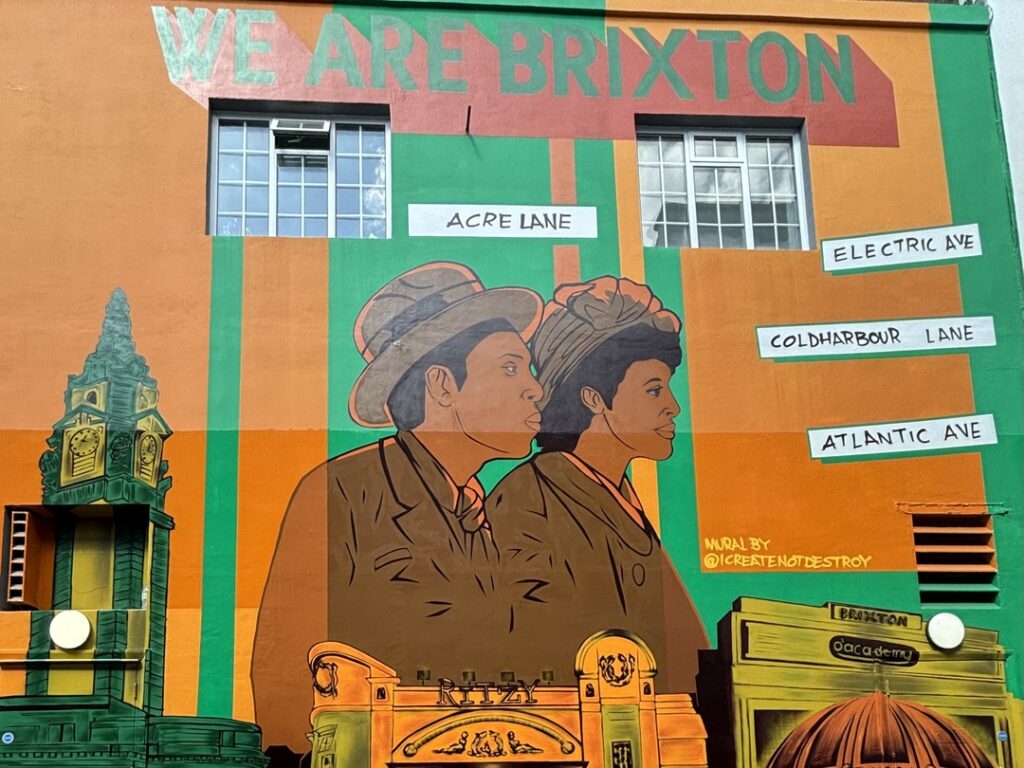
During my experience, I visited Kentish Town, Camden Town, Shoreditch, Westminster, Notting Hill, Stratford, Hampstead Heath (to visit the Kenwood House where Dido Elizabeth Belle stayed), Covent Garden, Soho, Bankside, Kensington, Oxford Street, Stockwell, Bloomsbury, Charing Cross and the list goes on. The neighborhood that stood out the most was Brixton.
It has a bad reputation, as many historically Black neighborhoods do, and has been stereotyped as a highly dangerous area with little to no redeeming qualities. The anti-Black rhetoric attached to Brixton is intentional. It prevents people from immersing themselves in its diverse, primarily Afro-Caribbean culture. It’s much easier, more comfortable, to say Brixton is a dangerous area rather than discussing the direct correlation to Black people and over policing and surveillance in our communities. Much like in the United States, Black people have organized against racial discrimination. Brixton is home to the Black Cultural Archives, 165 Railton Road, the Brixton Advice Centre, community activists and leaders. We face similar issues such as police brutality, gentrification, and displacement. But we all possess a similar vibrancy, sense of community, and the commitment to cultural preservation.
My friends and I loved Brixton, it reminded us a lot of New York. Kyla is from Chicago, Laila is from Philadelphia, and Gabi is from Virginia. As girls from “up North” there was something distinctly familiar about Brixton to us. This was also the first neighborhood we toured with a predominantly Black population. The sound of traffic and loud voices, the Market, the city kids walking home from school. Brixton felt like home away from home.
Across the Pond
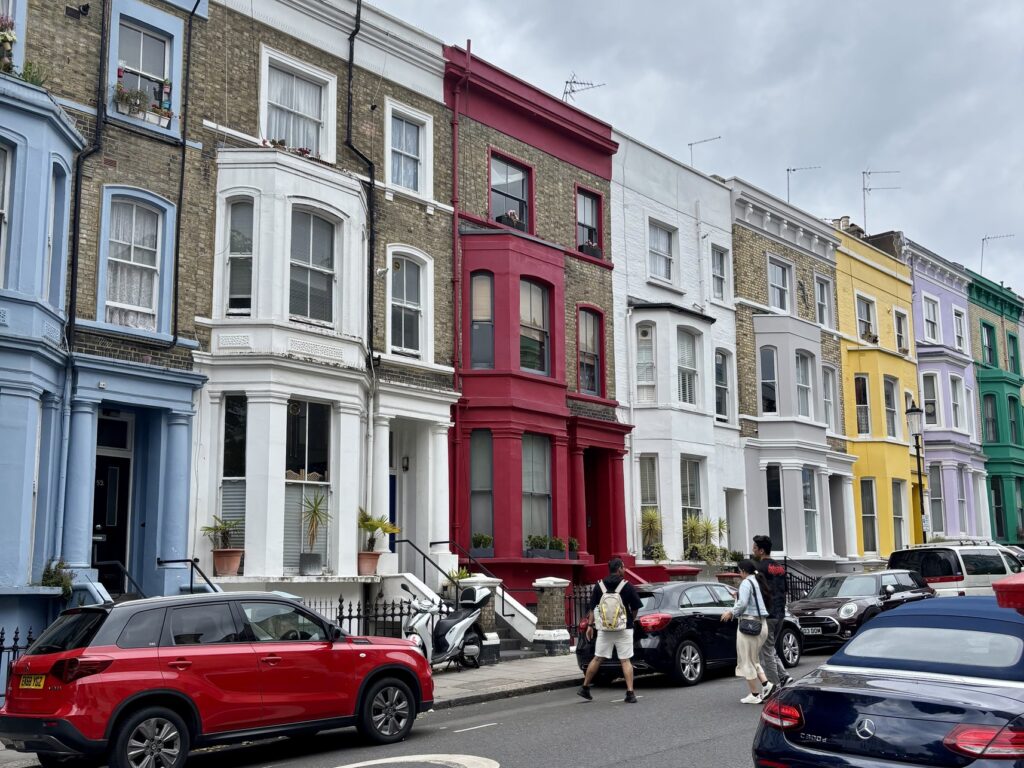
There is so much more to life than one’s hometown or school community. While they’re vital and grounding spaces, they can’t be the only ones a person has. I once thought these were the only spaces where I could exist and belong. Studying abroad makes me realize just how vast the world truly is. I discovered new cuisines that I love, met friends that made me feel connected, and created memories that would not have been possible had I stayed confined to what was familiar to me. So, I encourage you to go “across the pond,” as the British say, and allow yourself to travel abroad.