

The Unspoken Politics of Looking ‘Put Together’ While Traveling
“I am not my hair, I am not this skin, I am the soul that lives within” are lyrics from India.Arie’s song “I Am Not My Hair.” When traveling abroad in Paris, London, and Spain, so many of my experiences felt tethered to my Blackness in both positive and negative ways. I was indeed my hair and my skin both at home and abroad, despite wanting to be seen more for my spirit, my character, and my soul.
There’s a fine line between “curiosity” and “inspection.” Black travelers often face the former, when the natives of the country they’re visiting simply “haven’t seen Black people before.” In my experience, though, this was only partially true. I encountered experiences that were genuine and others rooted in racial profiling. All in all, traveling abroad won’t erase negative experiences related to race and/or ethnicity; however, it doesn’t define it.
Respectability
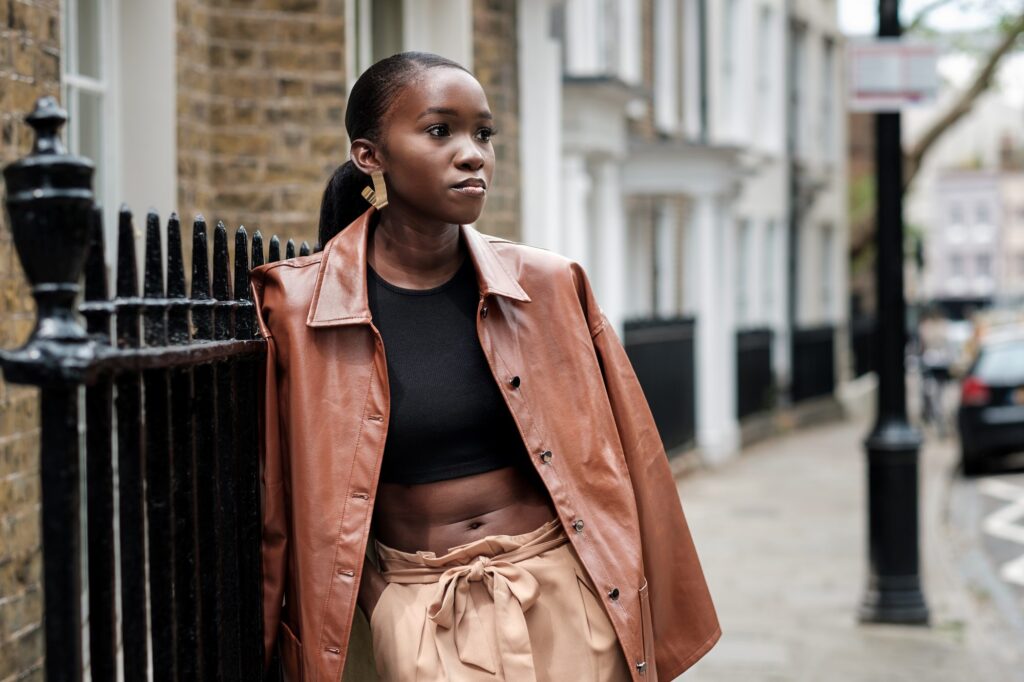
Respectability politics are a social survival strategy for members of a marginalized group to conform to the dominant group’s moral and behavioral standards. The “benefit” can be avoiding discrimination, gaining social mobility, or simply being accepted.
I didn’t consider this social behavior until I traveled to Spain. Growing up in a predominantly Black community, I never needed to perform for acceptance or survival. I’ve experienced bullies and strife, but never because of my Blackness. In those encounters, I wasn’t raised to shrink, so I approached Spain the same way.
My experience in Spain was a group trip hosted by my former high school, Bishop McNamara. One of the Spanish teachers, Mr. Mills, organized it, and it was open to students in all grades. On the trip, I became good friends with several girls, and we formed a little group. Whether we were walking to dinner or had free time to shop, we laughed and talked proudly and joyfully. We weren’t shy about our volume and were very self-aware of three things: that we were American, young women, and Black.
We knew the stereotype about Americans being too loud when traveling abroad, and we also knew about the perception of Black people as being “ghetto,” or “too much.” Europeans often relegate loud speech to specific settings, like pubs, certain restaurants, or sporting events, to name a few. Generally, there’s an unspoken rule to be quiet, calm, and modest otherwise. At first, it was easy for me to ignore the long stares while we ate or simply walked, or the whispers people thought I couldn’t hear. Until one day, at dinner, I broke.
My friends and I decided to have dinner at a restaurant near our hotel. They spoke and laughed like we do at home, like we’ve heard our mothers, aunties, and grandmothers speak. Loudly, joyfully, proudly, and using AAVE. That night, I was sick, so I was far more reserved than usual.
I could immediately sense that our table was irritating our waiter, but I brushed it off. After we ordered and everyone was receiving their food, I noticed mine was taking longer than usual. I thought, “Certainly, three small tacos can’t take this long.” My friends, who could tell I was sick and upset, spoke on my behalf. Many patrons came in after me and were being served. An hour passed; everyone had eaten, and there was still no food.
My friends then went directly to the table where the waiters meet near the kitchen to advocate for me. Eventually, my food arrived, but by then I was frustrated, embarrassed, and hurt. To make matters worse, a table of Spanish men across from us were talking about us. One in particular spoke about “American Black girls” loudly on the phone, laughing, thinking we couldn’t understand.
After that, I cried in front of everyone and left the restaurant. Nearby, a group of chaperones who were also teachers observed this, and one followed me outside to console me. They even offered to pay for my dinner. All I could think was, “Why me?” I wasn’t the one who was “making a fuss.” That night, I shrank, trying to avoid conflict, and got the same result. I realized that no matter what I did, or didn’t do, my Blackness would speak for me every time, whether I wanted it to or not.
After that night, I decided to no longer shrink. To not let one night define the remaining five days I had left to experience a new culture alongside my friends. That didn’t erase the hurt, but it gave me a bridge to cross and experience the trip for myself, not others.
Long Hair Don’t Care

I’ve had locs since I was eleven, and I’ve been growing them for almost ten years. I recently traveled to Paris, France, and I knew I wanted a cute hairstyle for the trip. I chose two-strand twists with knee-length extensions. As Black women, we spend so much time and money on our hair. Preparing for the trip becomes as important as the trip itself.
My mindset shifted from “where am I going to go” to “how am I going to look.” Now, while I don’t regret the time-consuming hairstyle, I do wish it were enough for me to simply just wear my hair. No fresh retwist, no long extensions, no boho pieces. Yes, I want to look and feel good, but without the judgment I know I’ll face if I don’t look my best, and that is stressful.
This style seemed common to me; as someone who goes to school in Atlanta, I see a variety of Black hairstyles daily. I didn’t realize how much I stood out until I got to the airport. On the way to Paris, I had a layover in another state. On the plane, I wrapped my hair in a scarf and bonnet to protect it and preserve the style. Normally, before landing, I take off my bonnet and scarf immediately, reminded of my mother’s words: never leave the house with it on. This time, because of my hair’s length, the length of my travel, and my general lack of energy, I didn’t feel like taking it off. So I wore it under my hoodie to cover it, with it peeking out slightly.
It wasn’t until I got off the plane, in a predominantly white state, that I realized not how I looked but how I would be perceived. To me, I looked comfortable, even cozy, but after getting numerous stares, I realized I didn’t look “put together” by their standards. Although airports are usually places where looking “less presentable” is acceptable, the rules didn’t seem to apply to me in that moment. So, I took it off and let my hair down, and funny enough, the stares didn’t stop. Now there was a new thing to look at: the extensions.
This didn’t end in the layover state nor in Paris; however, what did end was my insecurity. I decided the style wasn’t coming down, so neither should my confidence. As much as traveling offers you something culturally, you offer others something, too. I can’t read minds, so I’m not sure which stares were admiration, curiosity, or inspection. What I do know is that when I looked in the mirror to get ready every morning, I liked what I saw, and that was more than enough.
The Dress Code
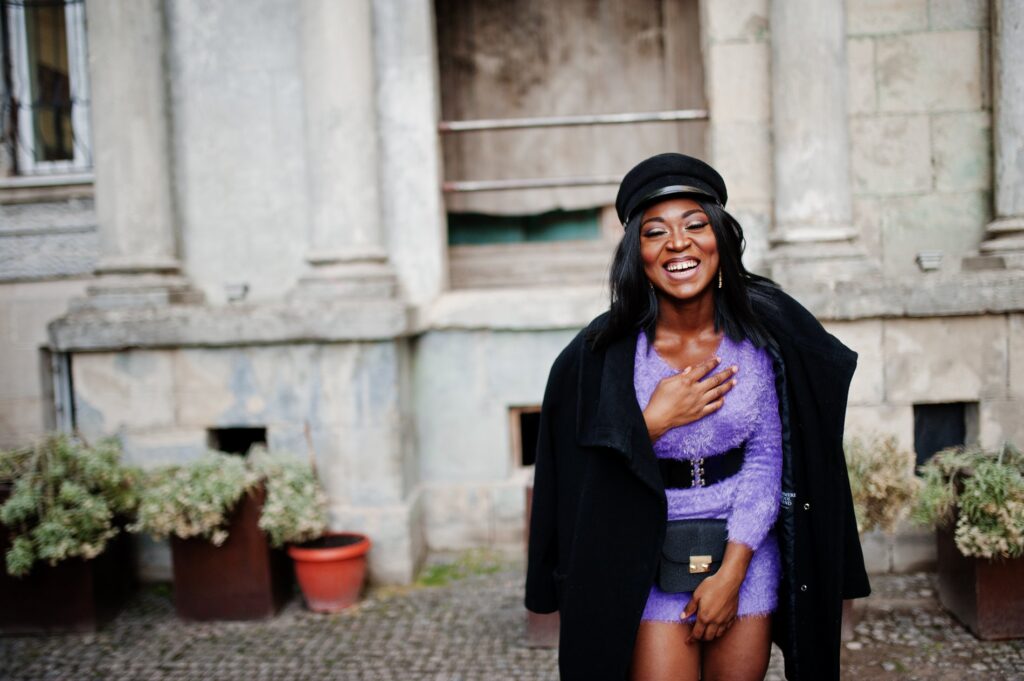
I thought that dress code violations stopped in high school, with a teacher sending you home for a cropped top or an exposed shoulder. In reality, it never ended, at least not abroad. America is known for not being particularly modest, with many women over time being able to dress how they see fit, regardless of respectability politics or patriarchy. So, when I wore my crop top abroad, I thought, “This is cute,” not “This isn’t appropriate for daytime.”
In London and Paris, I wore cropped tops or cropped my shirt for two reasons: one, the heat, and two, personal style. In London, I noticed that no one really wore cropped tops, not even young people like me. I saw them more when I went out to 18+ nightclubs with friends. One day, after our guided tour, my friends and I went to Brixton and used our free time to shop. Noticing that I was dressed differently than everyone else wasn’t hard to do, and we were the only Black people in the store (despite this being a predominantly Black neighborhood), but frankly I didn’t care.
We were looking at clothes and, at one point, we stopped in front of the mirror to take pictures. Immediately after, a security guard came up to us and told us that someone had reported a disturbance because we were “dancing in the mirror.” Mind you, we hadn’t spoken to anyone while we shopped, we weren’t being loud, and we especially weren’t dancing. So, we immediately decided to leave and shop elsewhere.
In Paris, I wore a crop top again, and although I was never racially profiled like I was in London, I was definitely stared at. A lot. It wasn’t until after my trip that someone told me staring can be seen as a form of social checking, an unspoken way of signaling local norms. I wasn’t trying to cause a scene or be indecent, but my appearance conveyed the opposite.
Others were silently telling me, “You’re not supposed to dress like that,” and “That’s not how we do things here.” I continued to dress as I normally do, opting not to wear crop tops, but still being myself and expressing myself. I had my unique hairstyles, loud outfits and accessories, makeup, and loud personality.
You Define What “Put Together” Is
While abroad, people have grabbed me to get my attention, stared at me, laughed at me, or inspected me. I’ve been a spectacle, as many Black travelers are. Being put together is often something Black Americans are taught by elders as a way to mitigate or survive the scrutiny that comes with being Black. But, from one Black traveler to another, I can attest that it didn’t spare me scrutiny. Nor did it make or break the trip.
This doesn’t mean that you should shrink yourself to accommodate others. You set the rules for your appearance, and being put together only puts you in a position to feel taken apart.
As you plan your next trip, learn what’s expected where you’re going. Know the dress codes at religious sites and everyday local norms. Then pack your own style anyway. Some people will stare no matter what you wear, so lead with who you are and let them meet you and your culture for the first time.